
Living near the ocean comes with tradeoffs that most Jersey Shore homeowners accept without much thought. Salt air rusts patio furniture. It fades paint faster. It leaves a film on windows. What fewer homeowners realize is that the same salt air is working on the plumbing inside and around their homes, and the damage tends to stay hidden until a pipe fails.
If you own a home in Allenhurst, Asbury Park, Ocean Township, Deal, or anywhere else along the Monmouth County coast, this is worth understanding. Here is how salt air attacks plumbing, what warning signs to look for, and what you can do about it.
How Salt Air Damages Plumbing
Ocean air carries microscopic salt particles inland on the wind. Those particles settle on every surface they touch, and they do not simply blow away. Salt is hygroscopic, meaning it pulls moisture out of the air. A thin layer of salt on a copper pipe holds a thin layer of moisture against that pipe continuously, even on dry days.
That combination of salt and sustained moisture creates an electrolyte, which is exactly what corrosion needs to accelerate. The chloride ions in salt are particularly aggressive toward the metals used in residential plumbing. They break down the protective oxide layer that normally forms on copper and they strip the zinc coating off galvanized steel faster than inland air ever would.
The result is a form of damage called pitting corrosion. Rather than thinning a pipe evenly, chloride attack concentrates on small spots and eats through the wall of the pipe in a localized area. A pipe can look almost entirely healthy and still develop a pinhole leak, which is why salt air damage so often surprises homeowners.
You Do Not Have to Be Oceanfront
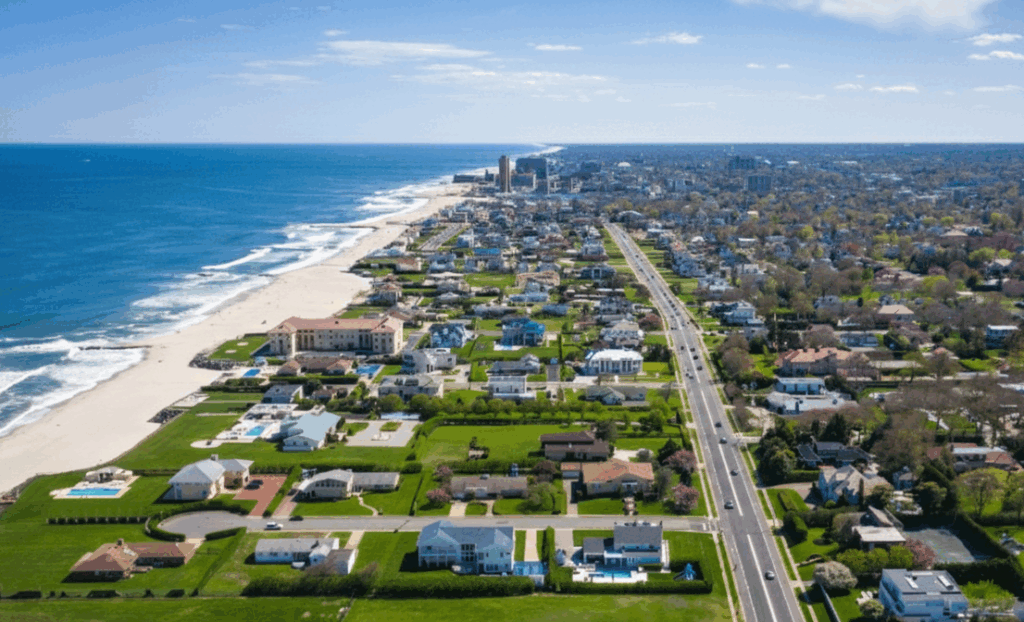
This is the part that catches people off guard. Salt aerosol does not stop at the boardwalk. Depending on wind patterns, storm activity, and local terrain, measurable salt deposition extends several miles inland from the shoreline. Corrosion engineers generally treat the first few miles as a severe marine exposure zone, with meaningful salt effects continuing well beyond that.
For Monmouth and Ocean County homeowners, that means a house in Ocean Township, Eatontown, or Neptune is still dealing with a marine environment even without a water view. The exposure is less intense than a beachfront property in Deal or Loch Arbour, but it is meaningfully different from a home in Freehold or farther west.
Nor’easters and coastal storms compound the problem. Strong onshore winds drive salt spray much farther inland than typical conditions, and a single significant storm can deposit more salt on your home than months of ordinary weather.
Where Salt Air Damage Shows Up First
Corrosion follows exposure, so the components with the most direct contact with outside air fail first.
Outdoor Showers
Outdoor showers are practically standard at the Shore, and they are the single most exposed plumbing on most coastal properties. Valves, supply lines, and fittings sit in salt air year-round with no protection at all. Sticking handles, seized valves, drips that will not stop, and green or white crust around fittings are all early signs.
Hose Bibs and Exterior Spigots
Exterior spigots corrode from the outside in. A hose bib that has become difficult to turn, weeps around the handle, or shows heavy discoloration at the connection to the house is telling you the metal is degrading. These are inexpensive to replace and expensive to ignore, because the pipe behind them runs into your wall.
Crawl Spaces and Unconditioned Basements
Many Shore homes sit on crawl spaces that breathe outside air. That means salt-laden humidity circulating around supply lines, shutoff valves, and pipe hangers continuously. Crawl space plumbing tends to be the worst-corroded plumbing in a coastal home, and it is also the least frequently inspected.
Water Heater Connections and Fittings
The supply connections, pressure relief valve, and expansion tank fittings on a water heater are common corrosion points in coastal homes, especially when the unit sits in a garage or utility space that is open to outside air. Rust staining or mineral crust around these connections deserves attention.
Points Where Dissimilar Metals Meet
Wherever copper connects directly to galvanized steel, you have a galvanic couple. In dry inland air that junction may last decades. In salt air, the salt acts as the electrolyte that drives galvanic corrosion, and the galvanized side can deteriorate rapidly. Older Shore homes with a mix of original galvanized pipe and newer copper repairs are especially vulnerable at these transitions.
Warning Signs Every Coastal Homeowner Should Watch For
- Blue-green staining on copper pipe or around fittings. A light patina is normal. Bright blue-green deposits, crust, or powder point to active corrosion.
- Rust streaks or flaking on galvanized pipe. Once the zinc coating is gone, the steel underneath rusts quickly and pipe walls thin from the inside as well.
- Discolored water, particularly after the house has sat unused. Rusty or blue-tinted water on first draw is a sign that metal is shedding into your supply. This matters for seasonal and second homes especially.
- Unexplained drops in water pressure. Corrosion byproducts build up inside pipe and restrict flow gradually, so the change is easy to miss until it is significant.
- Staining in sinks, tubs, or toilet bowls. Rust-colored or blue-green stains that keep returning after cleaning usually originate in the pipes, not the fixture.
- Pinhole leaks, or a history of them. One pinhole leak in a coastal home is rarely an isolated event. It is usually the first of several in pipe of the same age and exposure.
- Valves and shutoffs that will not turn. A seized shutoff valve is a corrosion symptom and a genuine problem, because you need that valve to work during an emergency.
What You Can Do to Slow It Down
You cannot change the fact that you live near the ocean, and you would not want to. You can absolutely reduce how quickly salt air degrades your plumbing.
- Rinse exposed plumbing with fresh water periodically. Hosing down outdoor showers, hose bibs, and exposed exterior components removes accumulated salt before it does sustained damage. Do this after any coastal storm.
- Insulate and protect exposed pipe. Proper pipe insulation reduces direct contact with salt air and cuts down on the condensation that feeds corrosion.
- Address crawl space humidity. Encapsulation, vapor barriers, and dehumidification reduce the moisture that salt needs to attack metal. This helps your ductwork and structure at the same time.
- Have your water heater anode rod checked. The anode rod is a sacrificial component designed to corrode so the tank does not. In coastal conditions it can deplete faster, and replacing it is far cheaper than replacing a tank.
- Exercise your shutoff valves. Turning main and fixture shutoffs a few times a year keeps them from seizing.
- Consider corrosion-resistant materials when you replace. When a section of pipe or a fixture needs replacing anyway, brass, stainless, or PEX may hold up considerably better in your specific location. A licensed plumber can tell you what makes sense for your home.
- Schedule an annual plumbing inspection. Corrosion is progressive and largely invisible. An annual look at the vulnerable points catches problems while they are still small repairs rather than emergencies.
Why an Annual Inspection Matters More at the Shore
A plumbing system in a home three blocks from the beach is aging on a different timeline than an identical system twenty miles inland. Pipe that might last 50 years in a dry inland environment can show meaningful degradation much sooner in a marine one, and the failure mode is a sudden pinhole rather than a slow decline you can plan around.
That is the real argument for inspection. A pinhole leak inside a wall that goes unnoticed for a week causes drywall, insulation, flooring, and mold damage that dwarfs the cost of the plumbing repair itself. Catching a corroding section before it opens up is the difference between a scheduled repair and an insurance claim.
This matters even more for seasonal properties and rentals, where a leak can run for weeks before anyone walks through the door.
Schedule a Coastal Plumbing Inspection
Oceanside Home Services has been working on Jersey Shore homes since 1990. We know what salt air does to plumbing here because we see it constantly, and we know where to look. Our licensed plumbers inspect the components that fail first in coastal homes, explain what we find in plain language, and give you honest options.
- Plumbing Services
- Plumbing Repair and Leak Detection
- Water Heater Service and Replacement
- Water Filtration Systems
Call us at (732) 443-5254 or schedule service online. We serve Allenhurst, Asbury Park, Ocean Township, Deal, Neptune, and communities across the Jersey Shore.